Frank Holzer has lived and worked in Thailand since 2005, holding senior leadership roles across
automotive, manufacturing and business representation. Now Executive Director of AustCham Thailand,
he has watched the Eastern Seaboard evolve from a manufacturing base into a more sophisticated
international business ecosystem. We asked him what has changed, where the next opportunities lie
and why relationships remain central to long-term success.
"People do business with people they trust, and trust is built through consistency, credibility and time."
1. You have lived and worked in Thailand since 2005, with senior leadership experience across automotive, manufacturing and now AustCham Thailand. Looking back, which changes on the Eastern Seaboard have been most significant for international business, and what has remained fundamentally the same?
Having lived and worked in Thailand since 2005, I have seen the Eastern Seaboard change enormously. When I first arrived, the region was already an important manufacturing centre, particularly for automotive and industrial production, but the scale, sophistication and connectivity of the region today are quite different.
The biggest change has been the evolution from being primarily a manufacturing base into a much broader economic ecosystem. The automotive industry has become highly developed, the supply chain has deepened, infrastructure has improved significantly, and there has been a much greater focus on advanced manufacturing, logistics, technology and higher-value industries. The development of the Eastern Economic Corridor has also given the region a much stronger strategic position within Thailand and ASEAN.
What has remained fundamentally the same is the importance of relationships. Thailand remains a
relationship-driven business environment. Having the right local partners, understanding how decisions are
made, building trust and demonstrating a long-term commitment are still every bit as important as they were
when I arrived.
I would also say that the resilience and adaptability of businesses on the Eastern Seaboard have remained constant. Companies that understand Thailand, invest in their people and take a long-term view tend to be the ones that succeed.
2. Through AustCham, you hear from businesses across many sectors. What are international companies most positive about on the Eastern Seaboard today, and what practical concern or obstacle do they raise most often?
The positive is the depth of the business ecosystem that has developed here. International companies are not simply coming to an empty industrial area and building a factory. They are entering an established network of manufacturers, suppliers, logistics providers, professional-services companies, financial institutions, educational institutions and an increasingly sophisticated workforce.
The geographic position is another major advantage. The Eastern Seaboard provides excellent access to Bangkok, the major ports, airports and the wider ASEAN market. For companies operating internationally, that connectivity is extremely important.
However, I also hear some consistent concerns. One is the availability of appropriately skilled people. As businesses move towards automation, digitalisation, advanced manufacturing and higher-value activities, the demand is increasingly for specialist skills rather than simply a larger workforce.
3. When companies need to attract and retain executives, specialists and their families, how important are quality of life and residential choice alongside industrial infrastructure? Where do Pattaya, Jomtien, Bangsaray and the surrounding communities fit into that equation?
I think this has become significantly more important than it was 15 or 20 years ago.
Industrial infrastructure gets a company into a region, but quality of life can determine whether you can attract and retain the people you need. A senior executive or specialist considering a three-, five- or ten-year commitment is not just looking at the factory, office or industrial estate. They are looking at where their family will live, schools, healthcare, restaurants, recreation, community, accessibility and what life will be like outside working hours.
This is where the Eastern Seaboard has a significant advantage. Pattaya and Jomtien provide a mature international environment with a wide range of accommodation, restaurants, entertainment, healthcare and services.
For international executives, that choice is important. Some people want to be close to the activity and amenities of Pattaya; others want more space and a quieter environment while still being within reasonable reach of their workplace.
4. The Eastern Economic Corridor is often discussed through major infrastructure and investment announcements. Looking beyond the headlines, where do you see the most credible opportunities over the next five to ten years, and what still needs to happen for the region to reach its full potential?
I believe the greatest opportunities will come from the transition towards higher-value manufacturing and services rather than simply adding more traditional industrial capacity.
Advanced automotive and electric vehicles will remain important, but I see significant opportunities around automation, robotics, electronics, digital technology, medical and healthcare-related industries, logistics and supply-chain development, renewable energy and businesses supporting the transition towards a lower-carbon economy.
There is also a significant opportunity to build more connections between international companies and Thai SMEs. If the EEC is successful in bringing higher-value investment into the region, the benefits should extend throughout the local supply chain rather than being concentrated within large multinational companies.
But infrastructure alone will not deliver the full potential. The region needs continued investment in education and vocational training, particularly in the technical and digital skills that future industries require. It needs efficient government processes, predictable regulation and greater coordination between different agencies. It also needs to continue improving transport connectivity and the broader liveability of the region.
Most importantly, I think the EEC needs to be viewed as an economic ecosystem rather than simply a collection of infrastructure projects and industrial estates.
If Thailand can combine infrastructure, skills, technology, international investment and quality of life effectively, the Eastern Seaboard has the potential to become one of the most important international business regions in Southeast Asia over the next decade.
5. For the past five years you have brought business leaders together through the monthly Eastern Seaboard Business Dinner. What have those gatherings taught you about how strong, long-term business relationships are built in Thailand, and what advice would you give a company or professional considering a serious long-term commitment to this region?
In reality, I have been active in the region for many years, including through the Automotive Focus Group (AFG), the Manufacturing Focus Group (MFG) and the Eastern Seaboard Business Dinner, which has been active since the early 2000s.
The dinners bring together people from very different industries and backgrounds, but what I have consistently seen is that the strongest relationships develop when people have the opportunity to meet repeatedly, get to know one another personally and establish trust before necessarily talking about business.
Thailand is still a market where people want to know who they are dealing with. That does not mean business is
not professional or commercially driven; it means that personal trust and credibility are important parts of doing
business.
I have also seen relationships develop at these dinners that would probably never have happened through a formal business meeting. Someone meets someone else socially, discovers a common connection or business requirement, and months later that relationship becomes commercially valuable.
The Eastern Seaboard has changed enormously since I arrived in Thailand in 2005, but that fundamental principle has not changed. People do business with people they trust, and trust is built through consistency, credibility and time.
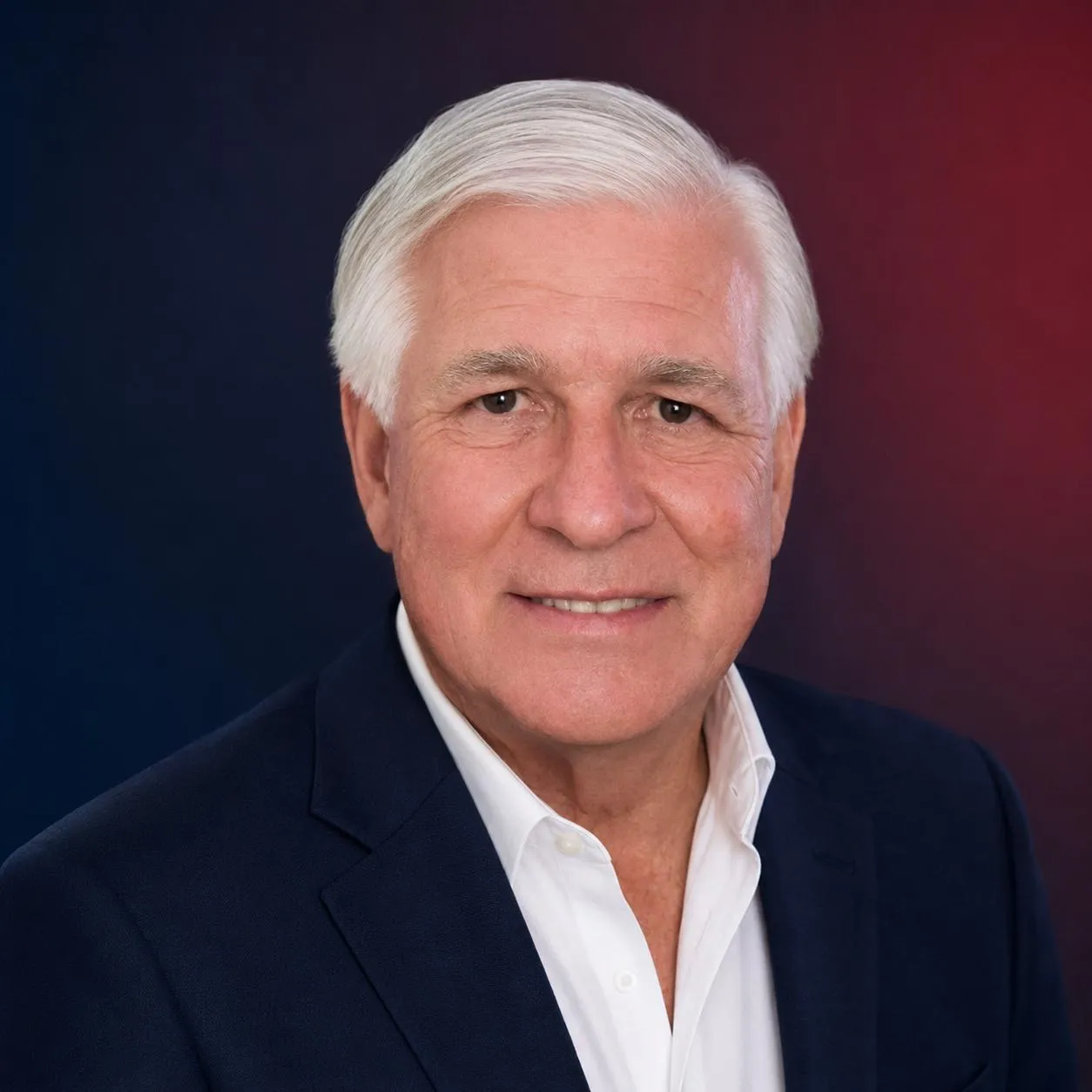
CONTRIBUTOR PROFILE
Frank Holzer
Executive Director, AustCham Thailand
Frank Holzer is Executive Director of the Australian-Thai Chamber of Commerce (AustCham Thailand). Australian-born and resident in Thailand since 2005, he previously served five years as an AustCham director, including two as Treasurer. His career in Thailand has included senior leadership roles with General Motors Thailand, MHG Asia Pacific Operations, ANCA Sheet Metal Solutions and King Furniture Thailand. He has also led the monthly Eastern Seaboard Business Dinner for the past five years, strengthening connections across the region's business community.
This article forms part of Expert Views, a Town & Country Property editorial series featuring first-hand perspectives from respected business leaders, developers and professionals connected to Thailand and its property market.
Approved by Frank Holzer for publication.