Developers who succeed only once can easily mistake leverage for skill. A rising market conceals weak assumptions, while easy finance encourages people to believe that liquidity will always be available. The professionals who endure take the opposite view. They underwrite conservatively, keep gearing at survivable levels and prepare for sales periods to stall.
Cornick has seen the Asian Financial Crisis, the Global Financial Crisis and COVID remove developers whose models depended on uninterrupted confidence. Each downturn was different, but the lesson was the same: treat every boom as temporary.
Leadership when confidence disappears
When a market turns, presentation becomes less important than cash. Cornick describes cash flow as the only truth that matters when confidence disappears, because a profitable project on paper can still fail if obligations cannot be met.
This is also when leadership becomes visible. Banks, buyers and staff need honest communication before uncertainty becomes distrust. Difficult decisions should be made early, even when the available information is imperfect. In Cornick's words, decisiveness under uncertainty beats paralysis every time.
"Cash flow is the only truth that matters when confidence disappears."
What makes a genuine landmark?
Design and branding can distinguish a project for a cycle. A truly irreplaceable location or title can protect its value for a generation.
Cornick points to The River, with thirteen rai of riverfront and a plot ratio that would be extremely difficult to reproduce today. The subsequent arrival of Four Seasons and Mandarin Oriental branded projects along the same stretch demonstrates an important principle: global luxury brands tend to follow locations whose value has already been proven.
He sees 185 Rajadamri as rare for a different reason. Its freehold status and outlook across the Royal Bangkok Sports Club and Lumpini Park cannot be manufactured by a newer building next door. A competitor may build a finer tower, but it cannot recreate the title or the view.
Pattaya offers its own examples. In Cornick's assessment, Northshore forced a market then associated largely with mid-market holiday homes to reconsider what genuine luxury could mean. Northpoint Wongamat went further, delivering absolute beachfront product on a coastline where suitable land had become exceptionally scarce.
The message is clear: finishes can be copied and marketing campaigns can be outspent. Scarcity cannot.
Read today's buyer, not yesterday's success
One of the most persistent development mistakes is repeating what worked in the previous cycle after the buyer has already changed. Nationality profiles shift. Financing behaviour changes. Lifestyle expectations evolve. Yet developers and agents often continue selling an old formula until the evidence becomes impossible to ignore.
Cornick watches two signals closely: absorption rates that quietly slow while the market dismisses the change as seasonal, and a widening gap between the product being launched and what buyers are actually requesting. Both are warnings to reconsider the concept before volume becomes exposure.
Pattaya's next ten years
Cornick remains positive about Pattaya's prospects. The Eastern Economic Corridor, improving connections with Bangkok, U-Tapao and a more diversified buyer base provide genuine upside beyond the city's traditional retiree and holiday-home markets.
But growth alone will not secure the opportunity. The decisive issues will be quality control and planning discipline. Pattaya has suffered before from oversupply of undifferentiated product, and it can do so again if developers pursue volume without considering long-term value.
The strongest developments of the next decade will therefore not be the ones that simply add more units. They will be the projects that understand the changing buyer, respect the limits of the market and create something that cannot easily be repeated.
CONTRIBUTOR PROFILE
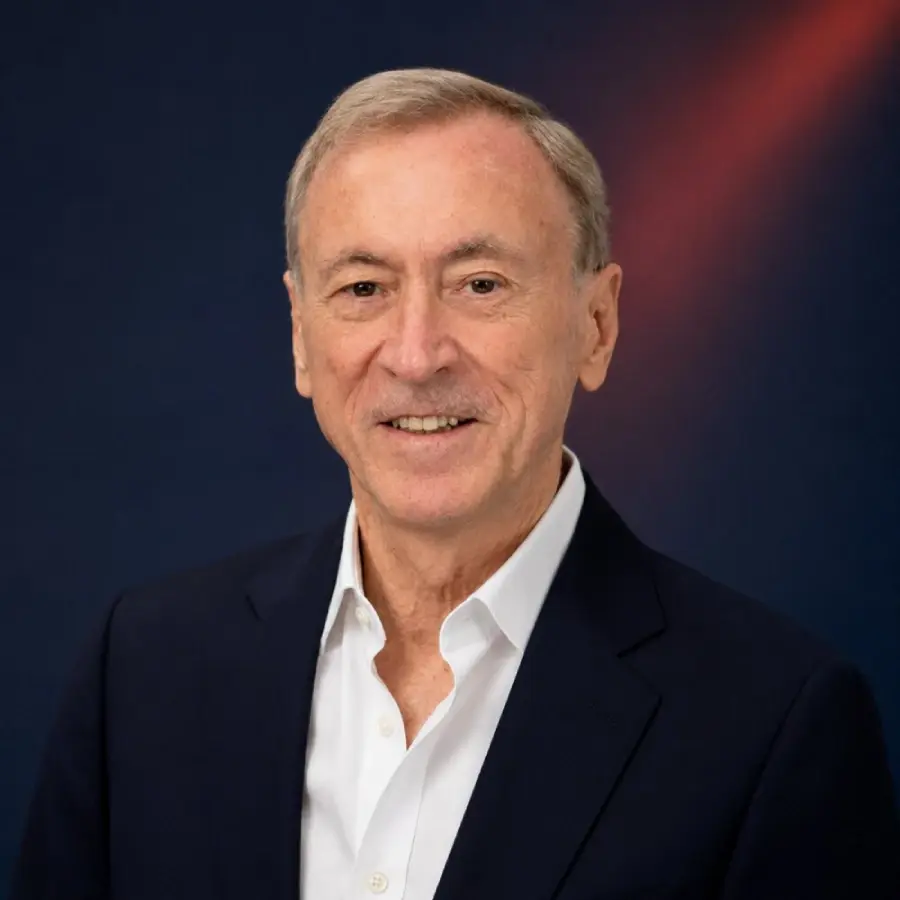
Nigel Cornick FRICS
British | Real Estate and Hospitality Adviser
Nigel Cornick FRICS has spent more than 40 years in real estate across the UK, the Middle East, Australia and Southeast Asia. Based in Bangkok since 1992, he led some of Pattaya's most influential developments, including Northshore and Northpoint Wongamat. He now advises on hospitality investment and capital introduction across Southeast Asia through Far East Consultants.